Memories
A small package that splits scanned album pages and restores their dates.
- Tooling
- Image clustering
Digitizing an old photo album often produces a scan containing several photos, stripped of the dates and organization that gave them context. I built Memories to make that cleanup less tedious: split a scanned page into individual images, restore useful metadata, and prepare the results for browsing or sharing.
What it does
Install the package with pip install memories. Its small API covers the repetitive parts of restoring a scanned collection:
open_imageloads an image for processing.divided_cropseparates a page scan into individual photos.add_dateandbulk_add_daterestore capture dates to one image or a folder.save_imageconverts an image to another format.make_pagearranges a collection as an HTML yearbook page.make_borderandrotate_imagehandle common cleanup steps.
Example
Importing memories
import memories as mem
Divide Images
Converting hard copies of images into their soft copies usually leads to more than a single image being scanned on the same page. And while many devices have an inbuilt option to divide that scan into multiple images, some don’t. The module divides a scan into its member images, based on background color if provided.
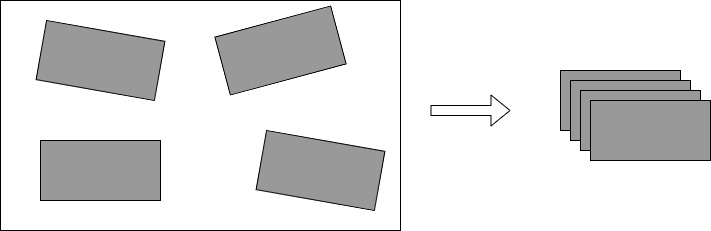
image = mem.open_image("./image.png")
mem.divided_crop(image, image_quantity = 6, bgr_value = [255, 255, 255])
Add Metadata
Allows the addition of metadata to images (only jpg supported). The feature currently only provides addition of Date metadata but will be updated in the future with more options.
# Add date to a single image using image path
mem.addDate("./image-1.jpg", "27/04/2021 12:00:03")
# Add date to images in bulk using folder path
mem.bulkAddDate("./", "27/04/2021 12:00:03")
Save Images
Easy conversion of an image into other formats. Currently supported input and output formats can be found here. Additionally saving to pdf can be performed, where pdf saves multiple input images in a single pdf file.
image1 = mem.open_image("./image.png")
image2 = mem.open_image("./image.png")
image3 = mem.open_image("./image.png")

mem.save_image(image1, "path/to/save_folder/file.extention")
# Save multiple images at once
mem.save_image([image1, image2, image3], "path/to/save_folder/file.extention")
# Save multiple images as a pdf
mem.save_image(["img-1.png", "img-1.jpg", "img-2.jpg"], "path/to/save_folder/file.pdf")
Scrapbook page
On input of name, short line and image, this function generates a year-book like webpage.
mem.makePage(["./source_folder/image1.png", "./random/another_source_folder/image2.jpg"], ["CSS", "Larry"], ["SASS", "That one got to you, didnt it"], "./save_folder")
Add borders
Make a border around an image. While support is limited here, it is slated to increase over time, adding new options and developments to the same.
Currently, you can add a normal border to the image and also a curved border. In both options, users can fine tune the width (normal) and radius (curved edges) of the borders.
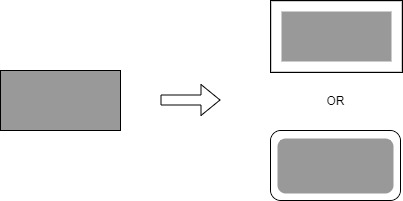
image = mem.open_image("./image.png")

# Squared borders
mem.make_border(image, "normal", bgr_value = [255, 255, 255], border_dimensions = [100, 100, 100, 100])
# Curved borders
mem.make_border(image, "curved", bgr_value = [255, 255, 255], border_dimensions = [100, 100, 100, 100], radius_dimensions = [100, 100, 100, 100])